Home // Mixing

High-Shear & Bulk Industrial Mixing Systems for Complex Formulations

Eliminate Fish Eyes, Unblended Solids, Dead Zone Stratification, and Localized Thermal Degradation Across Production Batches

Manutrol specifies and integrates automated high-shear, batch, and continuous industrial mixing systems engineered to deliver homogeneous dispersion and uniform heat transfer. By optimizing impeller geometry, tank ratios, dynamic baffle design, and motor torque profiles, we help processing facilities across the US and Canada eliminate off-spec batches, shorten mixing cycle times, and maximize product quality.

002/ Stage Bottlenecks & Line Frustrations

Floor-Level Mixing Challenges We Eliminate

Powder-Liquid Agglomeration, "Fish Eyes" & Floating Crusts

Hard-to-wet powders, polymers, and thickeners quickly form a gelled outer skin around a dry core when added to liquids. Conventional low-shear impellers lack the localized shear required to break these agglomerates, causing floating crusts, unblended solids, and extended batch cycle times.


Tank Dead Zones, Stratification & Solids Settling

Incompatible tank-to-impeller ratios (D/T ratio) and unbaffled tank walls create low-velocity dead zones at vessel corners. Without sufficient axial pump rates to maintain "just-suspended" slurry velocity, heavy solids drop out of suspension and cause uneven batch discharges.

Air Entrainment, Micro-Bubbling & Foam Overflow

Uncontrolled surface vortices pull ambient air directly into the fluid matrix during powder additions. Entrained air bubbles degrade product density, cause container foaming during downstream filling, and trigger false volumetric level readings.

Shaft Deflection, Mechanical Vibration & Seal Failures

Viscosity spikes during additive steps exert severe lateral forces on long agitator shafts. Thermal cycling, chemical incompatibility, and shaft runout destroy mechanical seals, risking hydraulic fluid leaks into master batches or toxic chemical exposure on the plant floor.

Localized Thermal Degradation & Motor Torque Trips

High-shear mixing generates intense localized thermal energy that degrades heat-sensitive active ingredients, biologicals, and specialty resins. Sudden rheological shifts in shear-thickening (dilatant) or shear-thinning (pseudoplastic) materials trigger motor torque spikes and unexpected drive trips.

Incomplete CIP Washdowns & Cross-Contamination

Sticky, high-viscosity residues cling to agitator hubs, baffle mounts, and shaft couplings. Inadequate Clean-In-Place (CIP) spray coverage leaves residual buildup in dead legs, creating severe cross-contamination risks during recipe changeovers.

003/ Engineering Capabilities & Material Mastery

Hazardous Chemical Handling & Regulatory Compliance Mastery

Safe Processing of Volatile Solvents, Flammables & Caustics
Handling aggressive caustics, flammable solvents, energetic materials, and toxic compounds requires rigorous safety engineering. We specify mixing systems built with total atmosphere containment, pressure-rated vessels, static grounding, and ATEX Zone 1/2 explosion-proof drive assemblies.
Cross-Border Regulatory Compliance (US & Canada)

Delivered mixing lines strictly comply with federal, state, and provincial codes across North America. Working alongside licensed partner engineering firms, we review, specify, and inspect compliance for:

OSHA HazCom (29 CFR 1910.1200) & WHMIS 2015
GHS chemical classification, 16-section SDS reviews, and fully bilingual (English/French) workplace labeling mandates.
OSHA Process Safety Management (PSM 29 CFR 1910.119)

Complete Process Hazard Analysis (PHA) integration for facilities handling threshold quantities of highly hazardous or reactive materials.

Explosives & Security Standards

Full alignment with Natural Resources Canada (NRCan Explosives Act), ATF 27 CFR Part 555, and DHS CFATS regulatory requirements.

Environmental & Waste Protections
Compliance with US EPA (RCRA, TSCA, EPCRA Tier II) and Environment and Climate Change Canada (CEPA) regulations for hazardous containment and air emission limits.
Building, Fire & Electrical Codes

Strict adherence to NFPA 30, NFPA 652, NFPA 495, National Fire Code of Canada (NFCC), and CSA/UL/ULC electrical certifications.

Our Process Evaluation & SDS Optimization Framework

Upstream ingredient characteristics directly impact downstream homogenization, extrusion, and filling stages. Before recommending hardware, Manutrol conducts a thorough analysis of all raw material Safety Data Sheets (SDSs) and production metrics to establish exact area hazardous classifications.

Leveraging hands-on experience across more than 10,000 distinct processing materials, we verify impeller dynamics and shear rates through pre-purchase lab testing at our North American facility to eliminate trial-and-error scaling risks.

10,000 +
distinct processing materials
004/ Real-World Installations & Plant Highlights

Proven Mixing Installations Across North America

005/ Featured Dosing Machinery & Equipment

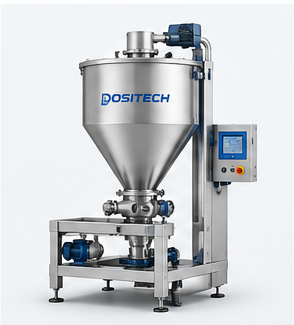
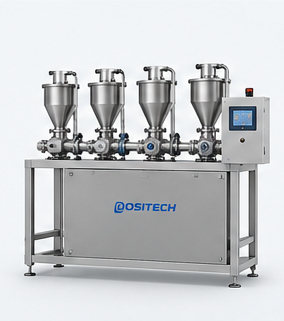
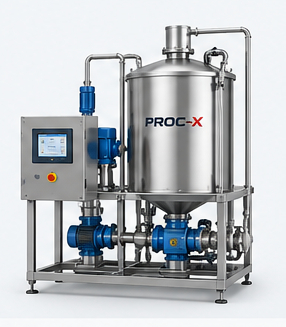
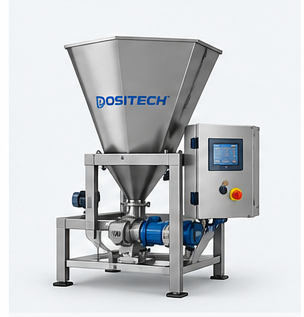
Authorized Principal Mixing Equipment

006/ Upstream & Downstream Integration

Integrated Modular Processing Flow

007/ Stage-Specific Technical Guide

The Industrial Mixing & Reaction Engineering Handbook

Comprehensive Guide to Chemical Processing Equipment, Safety & Reactor Design

Download our detailed technical reference guide for process engineers, plant managers, and safety directors evaluating chemical reaction and bulk mixing systems:
First-Principles Process Engineering

Mathematical physics modeling for agitator design, heat transfer coefficients, yield optimization, and impurity control.

Process Hazard Analysis & Inherently Safer Design

Mitigation strategies for runaway reactions, localized thermal spikes, and high-pressure vessel operations.

Regulatory Certification Standards:

Complete compliance roadmaps for ATEX, OSHA PSM, EPA RMP, REACH, and ISO 9001 continuous industrial operation (8,000+ hours).

Download Technical Guide
008/ Schedule a Technical Consultation

Ready to Eliminate Mixing Bottlenecks & Optimize Batch Yield?

Speak directly with senior process engineering consultants who understand floor-level fluid dynamics and hazardous compliance realities.

United States Operations

Direct Engineering Line & Sales Support - 555-123-4567

Canadian Operations

Direct Engineering Line & Sales Support - 416-200-3011