Home // Energy Storage & Battery Materials

High-Precision Energy Storage & Battery Material Processing Systems

Eliminate Active Material Segregation, Moisture Ingress, Slurry Viscosity Drift, and Metallic Contamination Across Battery Manufacturing Lines

Manutrol specifies and integrates high-performance sanitary and industrial equipment lines engineered specifically for lithium-ion, solid-state, nickel-manganese-cobalt (NMC), lithium iron phosphate (LFP), and next-generation energy storage material processing. Built to operate seamlessly inside nitrogen-glovebox or ultralow dew-point dry room environments, our processing lines protect active recipe integrity, maintain uniform electrode slurry rheology, and eliminate metallic contamination risk across North American gigafactories and chemical processing facilities.

002/ Industry-Specific Floor Challenges We Eliminate

Critical Floor Bottlenecks Facing Battery & Energy Storage Manufacturers

Active Material Segregation & Gravimetric Recipe Drift

Fine cathode/anode active powders (LFP, NMC, graphite, silicon composites) vary widely in bulk density and particle morphology. Manual weighment or uncalibrated volumetric feeding causes gravimetric drift, corrupting binder-to-active ratios and causing cell capacity variations or batch rejections.


Moisture Ingress & Active Material Degradation in Dry Rooms

Ambient moisture exposure degrades moisture-sensitive battery materials (e.g., sulfide-based solid electrolytes or lithium salts), causing gas evolution and chemical decomposition. Non-hermetic processing hoppers and unsealed fluid lines compromise dry room dew points (< -40°C).

Agglomeration & "Fish-Eyes" in Polymer Binder Dissolution

Dissolving polymeric binders—such as polyvinylidene fluoride (PVDF) or carboxymethyl cellulose (CMC)—into solvents (NMP or water) requires precise shear profiling. Conventional mixing leaves unhydrated polymer agglomerates ("fish-eyes") that clog downstream coater slot-dies and create pinholes in electrode foils.

Trace Metallic Contamination & Short-Circuit Safety Risks

Contact between abrasive active materials and standard steel agitators introduces trace iron, nickel, or copper metallic particles (> 10 µm). Stray metallic impurities cause internal micro-short circuits in assembled battery cells, leading to severe thermal runaway hazards.

Non-Uniform Slurry Rheology & Coaxial Shear Failure

Electrode slurries exhibit complex non-Newtonian, shear-thinning behavior with high solid loadings (> 70%). Inadequate mixing torque or dead zones inside reactor vessels result in localized viscosity variations, poor coatability, and uneven electrode film thickness.

003/ Specialized Engineering Capabilities & Regulatory Mastery

Engineered for Zero Metallic Contamination, Inert Containment & High-Yield Accuracy

Contamination-Free Metallurgy & Enclosed Atmosphere Fluid Dynamics
We specify battery processing equipment featuring ceramic (silicon nitride/zirconia) liners, tungsten-carbide rotor coatings, electropolished 316L stainless steel (RA ≤ 0.2 µm), and specialized fluoropolymer seals. Our system integrations combine sealed nitrogen-blanketed mixing chambers, planetary multi-shaft agitators, vacuum degassing, and closed-loop liquid recovery.
Full Regulatory & Safety Code Alignment (US & Canada)
Every system integrated by Manutrol for battery and energy storage facilities strictly adheres to federal, state, and provincial safety and environmental codes across North America:
NFPA 652 / 654 Combustible Dust & Reactive Solids
Deflagration containment, explosion isolation valves, static grounding interlocks, and inert gas purging for reactive active powders.
OSHA PSM (29 CFR 1910.119) & WHMIS 2015
Process hazard analysis (PHA) alignment, NMP solvent vapor extraction, and toxic chemical handling safety.
ATEX Zone 1/2 & NFPA 30 Flammable Liquids
Intrinsically safe instrumentation, explosion-proof drive motors, and closed-loop solvent purging for flammable binder preparation.
OSHA & CCHST Machine & Operator Guarding

Integrated Glovebox interfaces, zero-speed safety interlocks, and ergonomic powder containment valves protecting operators from hazardous active dusts.

004/ End-to-End Modular Chemical Processing Flow

Integrated Energy Storage Line Harmony

006/ Featured Chemical Processing Machinery

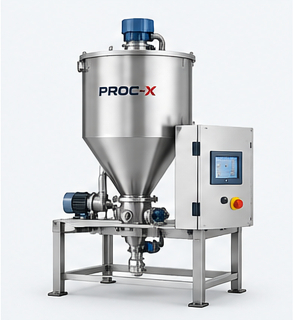
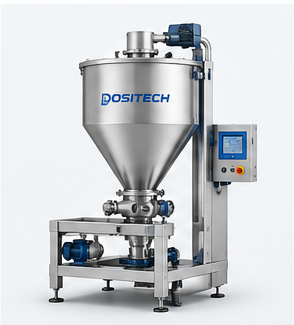
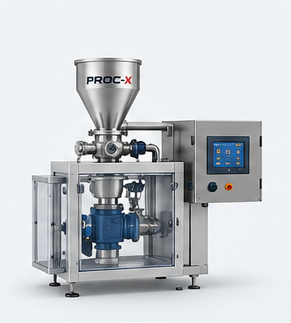
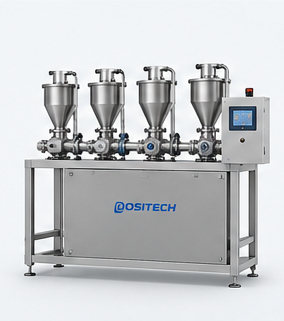
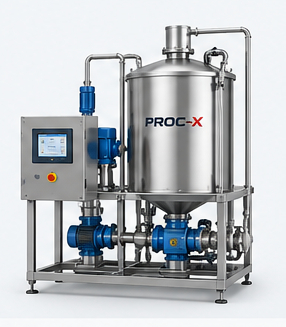
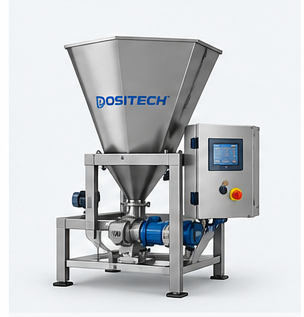
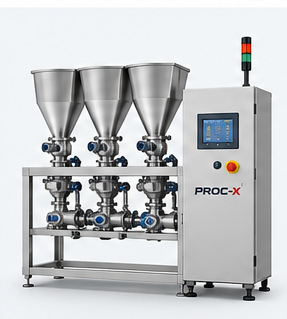
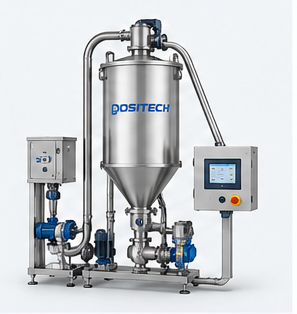
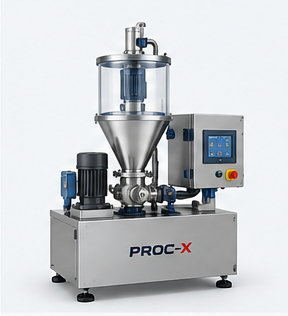
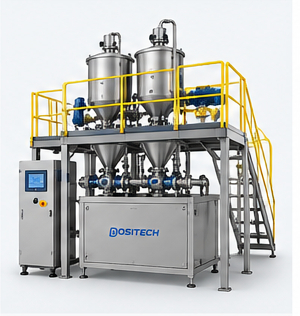
Authorized Principal Equipment for Battery & Energy Storage Operations

005/ Key Client Facilities & Industry Footprint

Proven Energy Storage & Battery Material Installations Across North America

Representative Client Facilities Supplied:

007/ Free Engineering Technical Guide

The Battery Slurry & Active Powder Processing Handbook

Engineering Reference for Plant Managers, Chemical Engineers & R&D Directors

Download our comprehensive technical guide to designing safe, high-yield battery material processing lines:
Contamination Control in Active Materials

Eliminating trace metallic impurities through ceramic linings and magnetic separation.

Inert Atmospheric Processing & Vacuum Degassing

Preventing active powder oxidation and removing micro-bubbles to optimize electrode coating density.

Loss-in-Weight Feeder Synchronization

Achieving ± 0.1% gravimetric accuracy across cohesive active powders and liquid binder feeds.

Download Technical Guide
008/ Schedule a Technical Consultation

Ready to Eliminate Slurry Viscosity Defects & Upgrade Battery Yield?

Speak directly with senior process consultants who specialize in high-viscosity battery slurry dynamics, inert dry room containment, and floor-level line integration.
United States Operations

Direct Engineering Line & Sales Support - 555-123-4567

Canadian Operations

Direct Engineering Line & Sales Support - 416-200-3011